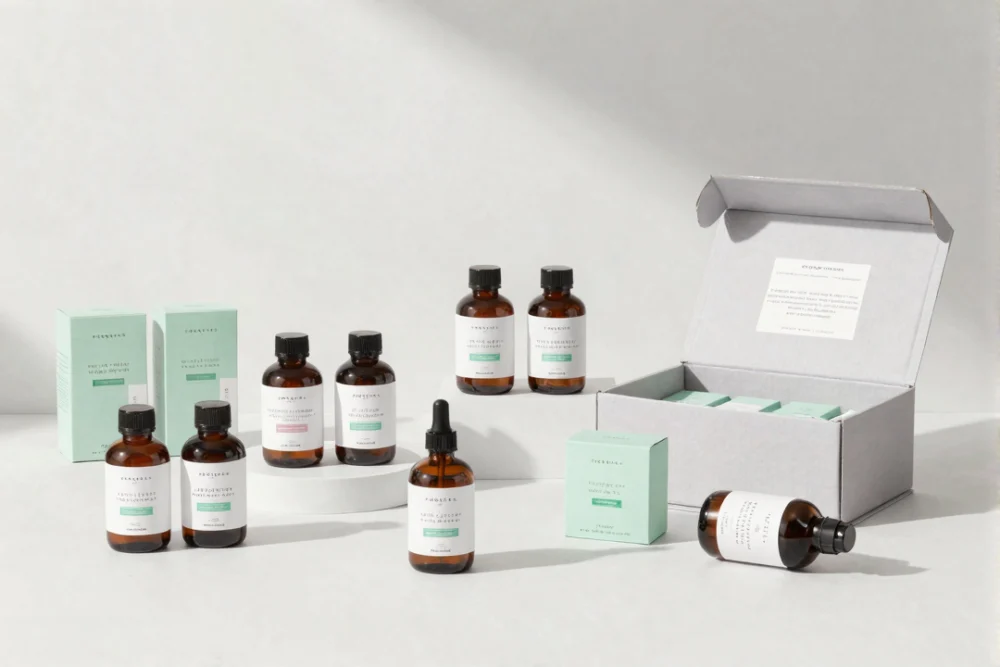

Label samples reveal how different materials and adhesives influence performance on varied surfaces.
Choose Custom Label Printing Dubai Without Breaking Brand Consistency
Custom label printing dubai works best when you treat the label as part of the packaging system, not as a last-minute sticker. Dubai packaging and marketing managers often need one label plan to work across retail shelves, e-commerce boxes, wholesale packs, gift kits, and exhibition samples. That is where problems start. A label can look sharp on a proof, then blur, peel, wrinkle, or fail a bilingual check once it reaches the real container.
The practical fix is to define the job before you approve the design. Start with the pack surface, storage conditions, run size, finish goals, and required declarations. Then match the material, adhesive, and print method to that brief. When you do that well, your packaging stays consistent across channels, your vendor quotes get clearer, and your team avoids expensive rework.
Key Takeaways
- Choose label stock and adhesive based on the actual container, temperature, moisture, and handling conditions.
- Use digital for pilots and fast changes, offset for premium presentation at higher volume, and flexo for stable large runs.
- Build Arabic and English into the first proof for UAE-facing packs instead of adding translation late.
- Ask for a sample or pilot before bulk production so you can check fit, clarity, and adhesion on the real pack.
- Compare total project cost, not only unit cost, because setup, finishing, proofing, and rush timing all affect label printing cost dubai decisions.
See Why Consistency Fails Across Channels
Packaging consistency means more than matching a logo. It means the same brand looks clear, readable, well-finished, and properly applied whether the product sits on a shelf, ships in a carton, appears in a launch kit, or gets handed out at an event. If one version uses a different stock, a weaker adhesive, or a rushed layout, the brand starts to look fragmented.
This matters because different channels put different stress on the label. Shelf display rewards finish quality and clean hierarchy. E-commerce adds friction, pressure, and movement. Wholesale handling can expose the pack to dust, stacking, and longer storage. Exhibition-ready packaging needs a strong first impression and polished detail. One label construction rarely fits every situation unless you plan for those conditions early.
Many teams lose consistency because they split work by campaign or by supplier. One vendor may choose a different stock. Another may print on a different process. A designer may resize a label without checking the container curve. A compliance review may force text changes after the artwork is already built. Each change looks small on its own, but together they create visible brand drift.
What good looks like is simple. The label should fit the pack cleanly, stay attached in normal use, keep text readable in both languages where required, and hold the same visual hierarchy across every sales channel. That is the standard buyers should use when reviewing options.
- Define where the pack will appear: retail, online, wholesale, exhibition, or mixed use.
- List the real conditions: moisture, oil, freezer, direct handling, or long storage.
- Decide what must stay consistent: color feel, finish level, bilingual clarity, and product data placement.
- Common mistake: approving a design that looks right on screen without checking how it behaves in shipping or storage. Avoid it by setting physical acceptance criteria before production.
Start With the Label Spec, Not the Artwork
The artwork should come after the technical brief, not before it. A label is a physical part of the pack. It has to bond to the surface, survive the route, and stay readable after application. If your team starts with color and finish but skips the technical details, you may end up choosing a beautiful label that fails in use.
The first questions are practical. What is the container made of? Is the surface smooth or textured? Will the pack sit in a cool room, a warehouse, a freezer, or a delivery van? Does the label need to stay on for the product life, or should it peel away without residue? These answers shape the full print spec and help you compare branding label printing services dubai with less guesswork.
The research pack shows that surface type strongly affects performance. Smooth metal, glass, and plastic usually give better adhesive contact. Textured surfaces reduce contact area, so the adhesive may grip the bumps but not the indentations. That changes how securely the label stays in place and how neat it looks after application.
A good buyer brief starts by describing function. Only after that should your team discuss visual treatment. That order protects both performance and brand quality.
Compare Materials by Use, Not by Trend
Material choice should follow product behavior, not design fashion. Paper stocks can work well in dry, stable conditions where cost control and printability matter more than moisture resistance. Kraft can support an eco-led or craft presentation. Synthetic materials such as PP, PE, and PET make more sense when the label needs to resist water, oil, or tougher handling.
If the pack moves through several channels, ask one simple question: what does the label need to survive? A product label for a dry folding carton may not need the same stock as a label for a bottle in a chilled cabinet. A premium gift box may need a more tactile finish. A pack used in events may need a cleaner face and stronger resistance to scuffing during handling.
The best material choice balances appearance and function. Premium does not always mean durable, and durable does not always mean visually right. That is why a material sample matters. Looking at a swatch helps, but applying a printed label to the real pack tells you much more.
What good looks like here is a stock that supports the finish you want, sits flat on the surface, and stays stable in storage and handling. If the label curls, absorbs moisture badly, or shows wear too fast, the stock is wrong for the job.
- Use paper where the environment is dry and the application is straightforward.
- Use synthetic stocks where waterproof or oil-resistant performance matters.
- Use eco-focused materials only after checking how they print and perform on the real pack.
- Common mistake: choosing stock for shelf appearance alone. Avoid it by confirming handling, humidity, and storage conditions first.
Compare Adhesives by Surface and Environment
Adhesive choice is where many packaging problems begin. The adhesive controls whether the label stays where it should, comes off cleanly when needed, or fails under moisture, heat, or rough handling. The research pack gives a clear decision framework: look at permanence, surface type, and environmental exposure together.
Permanent adhesives fit labels that must stay on for the full life of the product. Removable adhesives fit short-term labels such as coupons, temporary info tags, or promotional stickers where clean removal matters. Freezer-grade adhesives are more relevant where low temperature and food or pharma handling are part of normal use.
The adhesive family matters too. Rubber-based adhesives bond well to harder-to-stick surfaces such as some plastics, rubber, silicone, and teflon. Their weakness is lower resistance to heat and UV over time. Acrylic adhesives usually offer stronger durability against cold, moisture, solvents, and ultraviolet exposure. Blended adhesives combine traits but often cost more because they are tailored to the job.
Weatherproof constructions deserve special attention for Dubai packaging runs that may face warehouse shifts, delivery movement, or outdoor exposure during events. If the label needs to survive temperature swings and moisture, confirm weatherproof performance with the supplier before final approval.
What good looks like is simple: the label applies cleanly, stays down at the edges, leaves no bubbles in normal use, and matches the intended label life. If you need clean removal, there should be no sticky residue. If you need permanence, the label should not lift at the corners after routine handling.
- Choose acrylic when climate and handling stress matter.
- Choose rubber-based options when the surface is more difficult and the environment is controlled.
- Choose removable only when short-term use is part of the plan.
- Confirm weatherproof needs early for packs that move through harsher conditions.
- Common mistake: using one standard adhesive for every SKU. Avoid it by matching adhesive to both the surface and the real route.
Choose the Print Process by Run Size and Finish
The print process changes cost, speed, quality, and flexibility. This is one of the biggest decision points in custom label printing requirements dubai because the wrong process can lock you into high setup cost, limited changes, or quality that does not match the brand.
The research pack supports a practical buying rule. Choose the print method based on run size, artwork stability, finish needs, and how often the content changes. Short-run experimentation and fast campaign updates call for flexibility. Premium visual control and specialty finishing call for a process that can support that standard. Large, repeating runs call for scale.
A good decision here also depends on timing. If your team is still changing copy, claims, or bilingual layout, a setup-heavy process creates risk. If the artwork is stable and you are ordering in larger numbers, setup cost may be easier to justify. That is why the print process should follow the stage of the product, not just the wish list for the final look.
Use Digital for Pilots, Variants, and Fast Changes
Digital printing works best when flexibility matters. The research pack shows low minimum order quantities from 1 to 100 units in one comparison and recommends a pilot size of 200 to 300 units before scale in another packaging source. That makes digital a strong option for test launches, short runs, localized campaigns, influencer kits, and packaging that changes often.
Digital also supports variable data. That can include regional messaging, QR-based campaigns, small SKU variations, or short seasonal changes. If you want to test different messages across channels without committing to a large setup, digital gives you room to learn before you scale.
There are trade-offs. The pack notes that digital may not match offset on some gradients or heavy solid black areas, and specialty finish support can be more limited on some jobs. That does not make digital weak. It means the proofing step matters more. Review the file on the real stock, not just on screen.
A useful related read for process planning is digital printing vs offset, especially if your team is debating between agility and a more premium finish profile.
What good looks like with digital is a clean short run, fast approval path, readable text, acceptable color consistency for the brand, and easy revision if the content changes.
- Best for pilots, fast edits, multiple variants, and short campaigns.
- Helpful when packaging changes across retail, e-commerce, or event use.
- Strong option when you want to learn before ordering at scale.
- Common mistake: assuming digital automatically fits every premium job. Avoid it by reviewing gradients, black coverage, and finish expectations before approval.
Use Offset for Premium Presentation
Offset fits jobs where visual quality and finishing control are a priority. The research pack places offset around 1,000+ units and notes that setup can be expensive upfront but more efficient per unit at volume. It also supports finishes such as matte, gloss, spot UV, and foil stamp, which matter when the label must contribute to a premium brand impression.
For packaging managers, the value of offset is not only color quality. It is the ability to create a stronger finished look when the pack needs shelf authority or premium gift appeal. If the artwork is stable and the run is large enough, offset can produce the visual consistency that brand teams often want across packaging ranges.
The key is timing. Offset makes more sense after the label layout, claims, language, and dieline are locked. If you are still adjusting core content, the setup can become inefficient. If you are ready for scale and the product needs a polished face, offset earns a serious look.
What good looks like here is strong color accuracy, clean detail, and finishing that adds value without making the label hard to read or expensive to manage.
- Best for premium presentation and more advanced finishes.
- Better when the design is stable and the volume supports setup.
- Useful for labels that need a refined shelf look or gift-quality feel.
- Common mistake: moving to offset before the file is final. Avoid it by freezing artwork and compliance text before setup.
Use Flexo or Gravure for Scale
Flexographic printing is built for repeat production. The research pack says flexo becomes cost-effective around 10,000+ units in one source and can become attractive from 2,000+ units in some custom box scenarios depending on setup and job structure. It performs well on non-absorbent materials such as plastic films and corrugated applications and suits stable brand panels used again and again.
Gravure is the scale option for very long runs. It offers strong print quality, but it comes with high upfront cylinder costs of 3,000 USD (approx. 11,010 AED) per color and works best when demand is high and artwork stays fixed. The research pack points to 20,000+ units as a long-run gravure case and suggests gravure for annual demand above 100,000 units.
For most Dubai packaging teams, flexo or gravure should come later in the growth path, not at the testing stage. A brand often starts with digital, proves the design, then moves toward offset or flexo once the artwork and demand are stable.
What good looks like with scale printing is repeatable output, reduced unit cost at volume, and no constant changeovers caused by late artwork revisions.
- Use flexo for stable, repeating packaging runs and larger quantities.
- Use gravure only when very high run length justifies the setup cost.
- Plan scale methods only after the layout and claims are stable.
- Common mistake: choosing a volume process too early. Avoid it by validating demand and design first.
Control Color, Finish, and Shelf Impact
Once the technical base is right, the next question is how the label should look and feel. Finishing can raise perceived value, create stronger shelf recognition, and support premium or exhibition-ready branding needs. It can also add cost and clutter if used without restraint.
The research pack lists common finishing options such as foil stamping, spot UV, embossing, debossing, and die-cutting. It also points to trends like textured labels, transparent labels, personalization, and interactive features such as QR codes. These can all work well, but only when the finish supports the product story and does not interfere with required information.
For Dubai packaging managers, the real goal is balance. A label should catch attention, but it should also stay readable, fit the pack, and align with the rest of the brand system. If the finish makes the label harder to apply, harder to scan, or more expensive to revise, the value may not justify the effect.
What good looks like is a label with clear visual hierarchy. Brand name, variant, required product data, and key claims should remain easy to spot. Premium effects should guide the eye, not compete with the information.
- Use foil or spot UV when you need a stronger premium cue.
- Use transparent looks when the product itself supports the sale.
- Use texture only if the pack can hold it without hurting usability.
- Common mistake: stacking too many premium effects on one label. Avoid it by choosing one or two finish priorities.
Keep Exhibition and Retail Branding Aligned
Many Dubai brands need packaging that works in regular sales channels and also looks strong in launch kits, trade events, and premium sampling. That does not mean building a separate visual system. It means keeping the same brand panels, hierarchy, and tone across every version of the pack.
If your exhibition label looks more luxurious than your retail label, make sure the difference comes from finish level, not from a different brand identity. The core color feel, claim style, and information order should stay aligned. That protects recognition when buyers see the product in more than one place.
This is also where interactive elements can help. QR codes or tailored messages can add a useful event layer without changing the base brand structure. If your team is coordinating wider event materials, related reading such as event branding Dubai, sticker printing Dubai, and stand graphics can help connect packaging with booth and display planning.
What good looks like is simple. A buyer should recognize the same brand immediately whether the label appears on a product pack, a promotional sleeve, or a launch sample.
Build Compliance Into the First Proof
Compliance is part of the label design, not a final admin step. The research pack shows that UAE food labels need clear core information such as product name, ingredients, country of origin, manufacturer details, production and expiry dates, nutritional values, storage instructions, and allergen warnings. It also states that Arabic and English are both required for those labels.
The same research also points to halal certification for animal-derived ingredients, barcode and batch number requirements in some contexts, and date formatting such as DD/MM/YYYY in one product labeling source. Dubai Municipality guidance in the pack adds another practical rule: labels should be visible, legible, and not misleading.
This is why bilingual layout must be designed in from the start. If Arabic is added late, the hierarchy often breaks. The font may become too small, the text block may crowd key claims, or mandatory details may land in awkward positions. A good label proof leaves room for both languages and still keeps the pack easy to scan.
What good looks like here is a proof where both languages read clearly, required declarations are easy to find, and the technical data does not feel squeezed into leftover space.
- Build Arabic and English into the first design round.
- Keep allergen, date, origin, and storage details readable after application.
- Check every claim before print, especially health or nutritional language.
- Common mistake: treating translation as a final production step. Avoid it by reviewing bilingual hierarchy during the first proof stage.
Check Sensitive Categories More Carefully
Some categories need closer review. For food, the label may need ingredients, allergens, nutritional information, halal detail where relevant, storage instructions, and origin. For supplements, the pack in the research set calls for active and inactive ingredients, dosage instructions, country of origin, manufacturer name and address, batch numbers, storage conditions, and compliant claims language.
The supplement guidance is especially strict about claims. Disease-treatment, prevention, or cure language can trigger rejection. The pack also notes that Arabic should be integrated into the main label for long-term registration rather than added later with stickers. That is an important point for procurement teams because a label that passes in one market may still need redesign for the UAE.
The MoIAT label assessment source in the research pack broadens the compliance lens further. It mentions conformity marks, safety warnings, usage instructions, ingredient declarations, country of origin, product claims, and traceability data as areas that can trigger redesign or delay if they are wrong or incomplete.
What good looks like is a label review that happens before the print run, not after the shipment is ready. If the product sits in a sensitive category, involve regulatory review before the file is locked.
Use This Vendor Brief Checklist Before You Request Quotes
A strong vendor brief does two things. First, it makes quotes easier to compare. Second, it reduces production risk because fewer assumptions are left open. That matters when your team is searching for suppliers near me in Dubai and wants real like-for-like proposals instead of generic pricing replies.
The research pack supports a practical procurement approach. State the technical conditions clearly, ask for a sample or pilot, and request a line-by-line quote. Providers like Media Print UAE can respond more accurately when the brief already defines the surface, adhesive need, print process goal, and compliance expectations.
What good looks like is a brief that tells the vendor what the label must do, where it will be used, what information it must carry, and how approval will be judged. The table below can be pasted directly into an email or procurement form.
| Field | What to Provide |
|---|---|
| Product and SKU | Product type, SKU count, and whether the run covers one label or many variants |
| Channel use | Retail shelf, e-commerce shipping, wholesale pack, exhibition sample, or mixed use |
| Container and surface | Glass, plastic, cardboard, corrugated, metal, smooth, curved, or textured |
| Environment | Moisture, heat, freezer, oil exposure, outdoor handling, or standard indoor storage |
| Label life | Permanent, removable, campaign-only, or trial pack |
| Material preference | Paper, kraft, PP, PE, PET, or open to supplier recommendation |
| Adhesive requirement | Permanent, removable, freezer-grade, acrylic, rubber-based, blended, or weatherproof |
| Print process target | Digital, offset, flexo, or vendor recommendation based on quantity |
| Run size | Pilot quantity, full quantity, and repeat forecast |
| Artwork status | Final artwork, draft artwork, variable data, QR code, or bilingual layout still under review |
| Finish needs | Matte, gloss, foil, spot UV, embossing, debossing, die-cutting, transparent look, or textured feel |
| Compliance needs | Arabic and English, allergens, nutrition, halal, origin, barcode, batch number, storage instructions, claims review |
| Proofing | Printed sample, color proof, or pilot run required before approval |
| Timeline | Required delivery date, launch date, and any event deadline |
| Quote format | Separate setup, print, finishing, proofing, sample, and rush charges |
| Approval owner | Brand, packaging, regulatory, procurement, or leadership sign-off |
| Success criteria | No peeling, readable bilingual layout, stable brand color, acceptable finish, and on-time delivery |
Common mistake: sending only the artwork and quantity. Avoid it by sending the full technical and compliance brief at the start.
Check Cost and Lead Time Before You Approve
Pricing becomes easier to judge once the brief is clear. The research pack does not provide a universal rate card, but it does show which factors push costs up or down. Run length matters. Finish complexity matters. Artwork stability matters. Adhesive choice matters. Proofing, changeovers, and urgency also matter.
One source in the pack gives a useful directional example for custom boxes: small digital runs of 100 to 500 units may cost about 0.80 USD to 3.50 USD (approx. 2.94 AED to 12.85 AED) per box depending on size, board grade, print coverage, and finishing. That is not a direct label rate, but it is useful as a reminder that short runs with premium options cost more per unit than stable, large-scale work.
The same research also highlights timing. Standard jobs in one Dubai label source can take about 3 to 5 working days, while urgent work and specialty finishes may change that. For cross-border work, freight and duties can add 8% to 15% to landed costs. Those hidden costs can erase the value of a cheap headline quote if you do not ask the right questions early.
What good looks like is a quote that separates setup, print, finishing, sample cost, and any rush premium. If you cannot see the cost drivers, you cannot compare suppliers fairly.
- Ask whether a pilot will reduce risk before the full run.
- Ask how artwork changes affect setup-heavy processes.
- Ask whether coatings or special finishes change delivery time.
- Ask for standard and rush timing separately.
- Common mistake: choosing the lowest headline quote. Avoid it by comparing the full project structure, not just the base unit number.
Know What Usually Raises Cost
Several things tend to increase project cost. Custom or blended adhesives can cost more. Heavy coatings may reduce scuffing but add handling time and finishing expense. Repeated proof rounds can slow the job and raise costs. Dieline changes late in the process can also create extra setup work.
Process choice matters too. Flexo and gravure can become more efficient at scale, but the setup is harder to justify on short runs. Gravure is the clearest example because cylinder costs are high at 3,000 USD (approx. 11,010 AED) per color. Offset also has an upfront setup burden, which only makes sense when the run is large enough and stable enough to support it.
One of the best cost controls is discipline. Lock the design before committing to a setup-heavy process. Keep the finish stack realistic. Request a sample before approving a premium full run. That is often cheaper than correcting a mistake after production starts. If your wider pack also needs positioning work, custom packaging and packaging trends can help the team connect cost choices with brand goals.
Avoid the Mistakes That Cause Reprints
Most packaging teams do not fail because the concept is weak. They fail because small production mistakes pile up. The research pack lists several common risks that deserve a standing checklist before approval.
Low-resolution artwork can produce blurry prints. Wrong size matching can lead to peeling or misalignment. Poor material selection can create wear, edge lift, or oil damage. Wrong adhesive choice can fail under heat, moisture, or freezer conditions. Over-designed layouts can make the pack look busy and weaken buyer understanding.
Compliance mistakes are just as serious. Missing or inaccurate dates, allergens, claims, or origin details can lead to recalls, fines, delays, or relabeling. These are not abstract legal risks. They affect cost, timing, and brand trust. The easiest fix is to move every approval step earlier: technical, visual, and compliance.
What good looks like is a short pre-press review that checks the file, the pack fit, the language hierarchy, the adhesive, and the mandatory product data before the full run is released.
- Check file clarity and print readability.
- Check label size on the real pack, not only the dieline.
- Check storage and route conditions against the adhesive and stock.
- Check Arabic and English layout together.
- Check dates, batch codes, origin, and claims before approval.
- Common mistake: approving from a screen proof alone. Avoid it by testing a real sample or pilot on the actual substrate.
Follow a Simple Decision Path
When the choices feel complicated, return to a simple sequence. Start with the product and the route. Then choose the material and adhesive. Then pick the print process by quantity and finish needs. Then confirm compliance. Then test a sample. That order keeps the job clear and protects both cost control and brand consistency.
This approach also helps internal teams work together. Marketing can focus on hierarchy and shelf impact. Packaging can focus on performance. Procurement can compare quotes more fairly. Regulatory reviewers can check the right proof at the right time. Each team sees the same brief instead of solving the job from a different angle.
The goal is not to chase the most premium option. The goal is to choose the right construction for the real packaging run. That is the most reliable path for custom label printing dubai when the label has to work across channels and still feel like one brand.
- Define the container, surface, route, and label life.
- Shortlist stocks based on moisture, oil, texture, and finish goals.
- Shortlist adhesives based on surface and permanence needs.
- Choose digital, offset, flexo, or gravure based on run size and change frequency.
- Build Arabic and English plus required declarations into the first proof.
- Request a sample or pilot before bulk approval.
- Release the job only after technical, visual, and compliance checks all pass.
If your team follows that sequence, the result is not a promise of perfect output every time. It is a stronger buying process that reduces avoidable errors and gives you better control over consistency, timing, and cost.
References
- Food Label Requirements in the UAE ? Sigma Labels ? 2025-11-04 ? A Guide to Food Label Requirements in the UAE
- UAE Product Labeling Guide ? Product Registration UAE ? 2024-03-05 ? Mastering UAE Product Labeling
- Label Adhesive Selection ? Biotef ? How To Choose Label Adhesive
- Packaging Print Method Comparison ? Packifyme ? 2025-07-19 ? How to Choose the Right Printing Method for Your Packaging
- Custom Box Print Selection Guide ? Packola ? 2025-10-24 ? Digital vs Flexo for Custom Boxes
- Packaging Labeling Guide ? Marley Designs ? 2023-10-16 ? Packaging Guide
- Supplement Label Review ? Product Registration UAE ? 2025-06-24 ? What Authorities Check on Labels?
- Dubai Label Printing Guide ? Veesham ? 2025-09-16 ? Label Printing in Dubai

A procurement table showing the checklist, proofs, and sample test that keep technical, visual, and compliance goals aligned.
Frequently Asked Questions
What should I check before ordering custom label printing in Dubai?
Start with the product surface, storage conditions, and label life. The research shows buyers should confirm the material, adhesive type, print method, label size, and required UAE details before printing. A strong packaging label printing checklist also includes barcode, batch number, date format, and bilingual layout where needed. Asking for a sample before bulk production helps catch fit, color, and text issues early.
What label details are required for food products in the UAE?
The research says food labels must include the product name, ingredients list, country of origin, manufacturer details, production and expiry dates, nutritional values, storage instructions, and allergen warnings. It also states that labels must appear in both Arabic and English. For animal-derived ingredients, halal certification is required, and claims such as organic or sugar-free need evidence.
How do I choose the right label adhesive for packaging?
Choose the adhesive based on the surface and the environment. The research says acrylic adhesives handle moisture, solvents, UV, and temperature changes better, while rubber adhesives bond well to harder surfaces like some plastics, rubber, silicone, and teflon. Permanent adhesives fit long-term use, and removable adhesives suit temporary labels. Weatherproof options matter when labels face moisture or outdoor exposure.
Which printing method is best for short runs and large runs?
For short runs, digital printing is the most flexible choice in the research because it supports low minimums, fast turnaround, and easy design changes. Offset works better when you want premium print quality and higher volumes, usually from 1,000+ units. Flexo becomes more cost-effective for larger stable runs, around 10,000+ units in one source, while gravure suits very long runs with high setup cost.
How much does custom label printing Dubai usually cost?
Not specified in the research for labels as a fixed price list. The research does show that cost depends on run length, finish complexity, artwork stability, setup, and materials. One packaging source gives a small digital box run cost of 0.80 USD to 3.50 USD, but that is not presented as a standard label rate. The best supported answer is that buyers should compare total project cost, not just unit price.
Can I use the same label design from another market in the UAE?
Usually not without review. The research says UAE rules can be stricter in areas such as Arabic compliance, date formatting, ingredient disclosure, claims, and required product details. For some regulated products, Arabic should be built into the main label design rather than added later with stickers. A label that works in another country may still need changes before UAE approval.