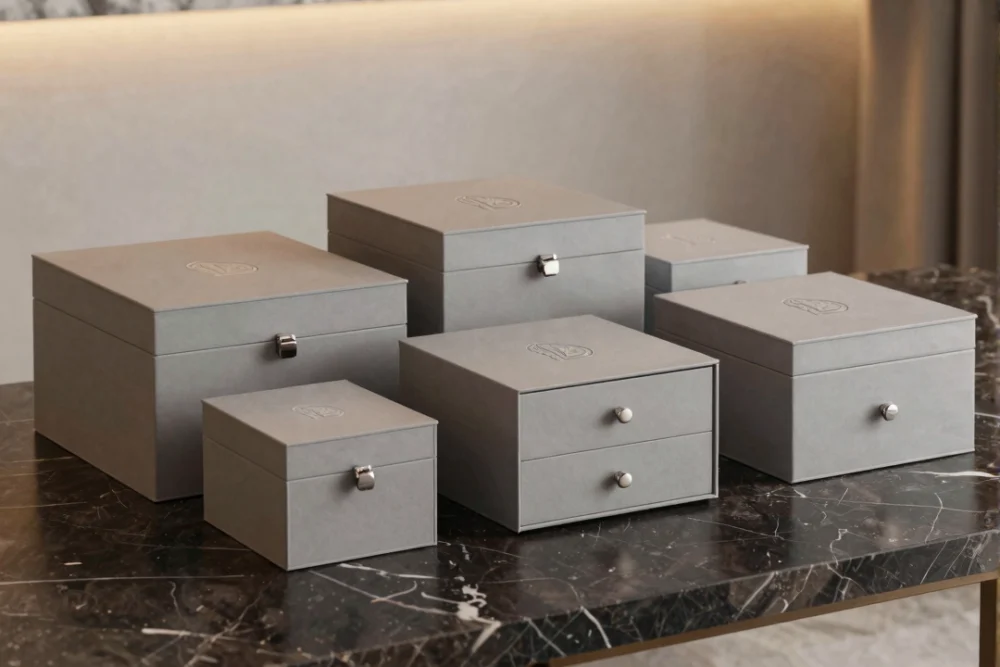

A magnetic closure box opening smoothly to reveal refined interior layers.
Choose the right structure for VIP gifting
Gift box printing dubai decisions start with structure because the box defines the first impression, protection level, and unboxing experience. Corporate marketing managers and HR teams often need a choice that feels premium, travels safely, and reflects brand standards in Dubai. The right structure also sets the stage for finishes like hot foiling or embossing to stand out.
What it is: the physical build of the box, including how it opens and how it holds the items. Why it matters: the structure shapes perceived value and protects the contents. How to do it: match structure to gift type, audience expectations, and delivery method. What to avoid: choosing a structure based on appearance alone without testing usability and fit.
Dubai’s premium market expects luxury packaging boxes dubai to feel deliberate and refined. Packaging is not only a container. It protects the gift in transit and creates anticipation before the product is seen. A strong structure makes the difference between a memorable corporate gift and a forgettable one.
Rigid boxes for status and protection
Rigid boxes use thick chipboard construction that holds shape, resists pressure, and feels premium. In Dubai, rigid boxes are the most popular structure for luxury gifting, which reflects their status-driven role in executive and VIP experiences. Rigid box printing supports refined finishes without bending or warping.
What it is: a stiff, non-collapsible box made from thick board. Why it matters: it protects high-value items and signals quality before the gift is opened. How to do it: specify rigid construction with a board thickness that suits the product weight and insert design. What to avoid: using low-grade board that makes the box feel weak.
- Rigid boxes are popular for executive gifts because they feel substantial.
- Board thickness commonly sits at 2–3 mm for premium rigid boxes.
- Common mistake: selecting rigid without testing the internal fit; avoid this by confirming inserts and sample checks.
Acceptance criteria for rigid box printing: the lid closes cleanly, corners stay sharp, and the box keeps shape after repeated opening. If the lid rocks or the box flexes under light pressure, the board is likely too thin for a luxury presentation.
Magnetic closure boxes for a premium reveal
Magnetic closure boxes add a smooth, controlled opening and a soft closing snap. They work well for influencer kits and VIP gifts because they make the reveal feel intentional and premium. They also support layered messaging inside the box.
What it is: a rigid-style box with a magnetized flap or lid. Why it matters: the opening moment adds a tactile memory. How to do it: keep magnet placement aligned with the natural hand position. What to avoid: hidden magnets or confusing opening mechanics.
- Magnetic closures create a satisfying open and close motion.
- They pair well with a minimalist exterior and a rich interior finish.
- Common mistake: overcomplicating the opening path; avoid this by testing a proof with real users.
Acceptance criteria: the box opens with one clear motion, and the closure aligns without forcing. If the user has to guess where to open, the mechanism needs refinement.
Drawer-style boxes for curated assortments
Drawer-style boxes add a staged reveal, which works well for multi-item gifting such as dates, sweets, or product kits. The sliding drawer format allows for compartments and a structured presentation, creating a sense of discovery.
What it is: a box with a sleeve and a sliding tray. Why it matters: it creates a layered unboxing experience and organizes multiple items. How to do it: use precise internal dimensions and strong trays to prevent movement. What to avoid: using oversized trays that allow items to slide and scuff.
- Drawer boxes support multi-compartment organization.
- They help guide the recipient through a curated experience.
- Common mistake: ignoring internal protection; avoid this by specifying foam or tray inserts early.
Acceptance criteria: the drawer slides smoothly without sticking, and items do not move when the box is tilted. If the drawer binds or the items rattle, the structure needs adjustment.
Window and eco-friendly options as supporting styles
Window boxes show the product without opening the box. They can be useful for corporate gifting when the product itself is visually premium. Eco-friendly kraft options are also rising in demand and can still feel luxurious when combined with premium finishes.
What it is: a structure with a transparent or cut-out window, or a kraft-based box for sustainable positioning. Why it matters: visibility builds trust and sustainability builds brand alignment. How to do it: pair window designs with strong inserts and use refined printing on kraft. What to avoid: using window styles for fragile items without extra protection.
- Window styles include die-cut, PVC, acetate, and open window designs.
- Eco-friendly options can still look premium with foil or embossing.
- Common mistake: treating eco materials as low-end; avoid this by using premium printing and a clean layout.
Acceptance criteria: the window is cleanly cut, the insert holds the product tight, and the material finish feels intentional rather than raw or unfinished.
Select finishes and materials that signal premium
Finishes transform custom printed boxes dubai into brand assets. The right finishes add tactile and visual depth without overwhelming the design. In a VIP gifting context, finish choices can elevate perception more than bold graphics.
What it is: surface treatments and materials applied to the box, such as foiling, embossing, and textured laminations. Why it matters: finishes shape the unboxing experience and brand memory. How to do it: choose a primary finish and support it with a small number of secondary effects. What to avoid: stacking too many effects that create visual noise.
Luxury packaging trends emphasize premium materials, minimalism, and a refined feel. In Dubai, brands increasingly use finishes that feel modern and subtle rather than flashy.
Finishing options that elevate perception
Hot foiling delivers metallic shine for logos and accents. Embossing raises a logo or pattern to create a tactile edge. Spot UV adds glossy contrast to selected areas and draws attention to a key message. Matte and soft-touch laminations create a smooth, refined surface.
What it is: specific surface treatments applied after printing. Why it matters: finishes create visual hierarchy and tactile memory. How to do it: apply a limited number of effects to protect clarity. What to avoid: mixing too many finish types and losing sophistication.
- Hot foiling creates a controlled metallic shine for brand marks.
- Embossing adds depth and craftsmanship to key elements.
- Spot UV highlights chosen areas and adds contrast.
- Common mistake: overloading the design with effects; avoid this by limiting to a small set of finishes.
Acceptance criteria: the finish aligns cleanly with the printed artwork, and the tactile effect feels precise rather than rough or uneven.
Materials and textures that feel luxurious
Material choice defines weight, texture, and the overall luxury feel. Matte-finish paper and textured surfaces like linen or suede create a modern premium look. Velvet-covered and leather-wrapped boxes are used for high-end gifting where the box itself becomes a keepsake. Acrylic options add a high-gloss premium presentation when used appropriately.
What it is: the paper, board, and wrap materials that create the surface of the box. Why it matters: the material is the first physical contact point and influences perceived quality. How to do it: match material to the gifting moment and brand tone. What to avoid: choosing a material that conflicts with the product or audience.
- Matte and textured papers create a refined, modern look.
- Velvet and leather wraps suit executive and premium gift sets.
- Acrylic can create a sleek visual effect for select products.
- Common mistake: choosing a material without touching a sample; avoid this by confirming the tactile feel in a proof.
Acceptance criteria: the surface is consistent, the wrap is smooth, and the edges stay clean without peeling or fraying.
Smart and personalized elements that add value
Personalization increases emotional impact. QR codes, NFC tags, and AR features can add a digital layer, while monograms and tailored colors reinforce exclusivity. These elements work best when they support the tactile experience rather than replace it.
What it is: variable elements and digital connectors that extend the physical gift into a digital experience. Why it matters: personalization makes recipients feel recognized. How to do it: use digital elements for a clear purpose, such as a message, story, or verification. What to avoid: adding technology without a defined benefit.
- QR and NFC features can link to a message or brand story.
- Monograms and tailored color palettes strengthen exclusivity.
- Common mistake: adding tech that feels intrusive; avoid this by keeping digital elements optional and user-friendly.
Acceptance criteria: the personalization looks clean and integrated, and any QR or NFC element works easily without special instructions.
Plan production timelines and approvals
Timelines decide whether the gifting program succeeds or fails. Corporate gift packaging often requires more steps than standard print projects. That makes early planning critical for Dubai-based teams working on seasonal campaigns or VIP outreach.
What it is: a structured plan for design, proofing, production, and delivery. Why it matters: complex finishes and structures require longer lead times. How to do it: plan backward from the gifting date and secure approvals early. What to avoid: compressing a complex project into a standard timeline.
Production stages to align teams
Luxury box production usually moves through four clear stages: concept creation, material selection, printing and finishing, and assembly with quality checks. Each stage builds on the previous one. If you change a material late, the finishing and assembly may also need to change.
What it is: a step-by-step process that transforms design into a physical box. Why it matters: each stage carries dependencies and costs. How to do it: confirm materials and finishes before final artwork approval. What to avoid: approving artwork before confirming materials.
- Concept creation defines structure and visual goals.
- Material selection locks in the tactile feel and durability.
- Printing and finishing apply the visual and tactile effects.
- Assembly and quality checks ensure fit and protection.
- Common mistake: changing materials after approval; avoid this by finalizing material choices before proofing.
Acceptance criteria: proofs match the approved design, finishes align to artwork, and assembly fits the product without pressure or movement.
Lead times, minimums, and rush considerations
Standard production often needs 6–8 weeks. Complex finishes can require 10–12 weeks to complete. Minimum order quantities commonly start at 50–100 units, with more favorable tiers at 300–500 units. Rush orders can raise costs by 20–30 percent, so confirm the schedule early.
What it is: time and quantity requirements that shape feasibility. Why it matters: late planning can force rushed production and higher costs. How to do it: schedule approvals and decision points early. What to avoid: assuming complex designs fit into standard lead times.
- Use standard lead times for simple structures and finishes.
- Use longer lead times for complex finishes and inserts.
- Common mistake: underestimating time for proofing; avoid this by locking review windows early.
If you need clarity on timing across multiple print assets, see Print Collateral Timeline for Expo Success.
Avoid design mistakes that hurt VIP gifting
Luxury packaging loses its value when usability, fit, or clarity breaks down. These mistakes often look small on screen but become obvious in the physical box. Avoiding them protects the gift and preserves brand credibility.
What it is: common design failures that reduce perceived value or cause damage. Why it matters: a premium gift can feel cheap if the box is confusing or poorly built. How to do it: test structure, fit, and readability before final production. What to avoid: prioritizing novelty over function.
Keep opening and fit simple
Complex opening mechanisms can confuse recipients and reduce perceived quality. Poor fit allows movement that can scuff or damage high-end products. Inserts and trays reduce this risk and create a tidy presentation.
What it is: usability and fit standards that protect the gift. Why it matters: a shifting product looks careless. How to do it: specify precise internal dimensions and include inserts where needed. What to avoid: oversized cavities that allow movement.
- Keep the opening motion obvious and intuitive.
- Match internal dimensions to the product size and shape.
- Common mistake: skipping inserts for fragile items; avoid this by specifying trays or foam.
Acceptance criteria: the product stays in place when the box is tilted and opens in one clear motion.
Limit effects and use quality materials
Luxury packaging works best when the finish palette is controlled. Overloading the design with effects can make the box feel busy and reduce its premium look. High-quality paper also matters for rigid structures, where weight and surface integrity are part of the perception.
What it is: the balance between finish effects and material quality. Why it matters: too many effects can make the box look dated. How to do it: keep the finish list short and invest in paper quality. What to avoid: using low-quality paper with high-end finishes.
- Use only a small number of finish effects in a single design.
- Prioritize high-quality paper, commonly 800–1500 gsm for rigid boxes.
- Common mistake: overusing effects to appear premium; avoid this by choosing one hero finish and one support finish.
Acceptance criteria: the finish looks clean, and the paper holds its shape without visible warping.
Make the box distinctive and informative
Generic packaging blends into the background and weakens brand memory. Essential information must be readable and placed in a way that supports the gift experience. A distinctive structure or a simple brand story can make the box feel unique without overdesign.
What it is: the balance between identity, clarity, and function. Why it matters: recipients remember the brand when the box feels intentional. How to do it: use consistent branding, clear text, and a distinctive element. What to avoid: crowded layouts or missing key information.
- Keep text readable in size, contrast, and placement.
- Use branding elements that align with your core identity.
- Common mistake: missing essential text or instructions; avoid this by using a checklist before proofing.
For broader packaging strategy and brand perception, see How Custom Packaging Boosts Brand Perception.
Build sustainability into luxury packaging
Sustainability is now a standard expectation in premium gifting. Dubai clients increasingly look for eco-friendly materials that still feel refined. This makes sustainability part of luxury packaging decisions, not a secondary add-on.
What it is: material and design choices that reduce environmental impact. Why it matters: sustainability influences perception and aligns with corporate values. How to do it: use recyclable or biodegradable materials with high-end finishing. What to avoid: vague sustainability claims without material proof.
Eco materials that still feel premium
Eco-friendly materials like kraft, bamboo fiber, jute, and other biodegradable options can still feel premium. Finishes such as foiling or embossing can lift the look while keeping the base material sustainable. Minimalist designs also reduce material usage without losing elegance.
What it is: eco materials paired with premium design choices. Why it matters: it balances sustainability with luxury expectations. How to do it: choose eco materials and apply restrained, high-quality finishes. What to avoid: using eco materials with low-quality printing that appears cheap.
- Combine eco materials with premium finishing for a luxury feel.
- Use minimalist layouts to reduce material use and improve clarity.
- Common mistake: treating eco materials as a budget choice; avoid this by investing in surface quality.
Acceptance criteria: the eco material looks intentional, not rough, and the print quality stays clean and sharp.
Communicate sustainability clearly
Eco packaging works best when the recipient understands it. A short note or insert can explain the material choice and encourage reuse. This keeps the message clear without dominating the design.
What it is: light-touch sustainability messaging. Why it matters: clarity reinforces trust and reduces confusion. How to do it: add a small, readable message in an interior panel or insert. What to avoid: long copy that competes with the gifting message.
- Use concise messaging to highlight eco choices.
- Keep the sustainability message aligned with the brand tone.
- Common mistake: overexplaining sustainability; avoid this by keeping it short and simple.
For broader eco print guidance, see Eco-Friendly Printing Choices in the UAE.
Use a vendor brief checklist to speed procurement
A strong vendor brief reduces delays, protects quality, and helps procurement teams compare proposals fairly. It also keeps internal stakeholders aligned on structure, finish, and timeline before vendor contact. If you are finding suppliers near me in Dubai, UAE, a complete brief makes discussions faster and more accurate.
What it is: a structured summary of requirements for a custom gift box order. Why it matters: unclear briefs lead to mismatches and rework. How to do it: specify structure, materials, finishes, and timelines in a single document. What to avoid: leaving out dimensions or inserts.
| Field | What to specify |
|---|---|
| Project goal | VIP gifting, influencer kits, client appreciation, or employee rewards |
| Audience | Executives, clients, partners, or internal teams |
| Box structure | Rigid, magnetic closure, drawer-style, or window display |
| Dimensions | External size and internal fit requirements |
| Insert type | Foam, tray, fabric pouch, or custom insert |
| Materials | Paper type, board quality, eco materials if needed |
| Finishes | Foil, emboss, spot UV, matte, textured surfaces |
| Branding | Logo placement, color palette, typography |
| Personalization | Names, monograms, QR or NFC elements |
| Quantity | Total units and phased batches |
| Timeline | Standard or complex lead time, approval checkpoints |
| Proofs | Digital proof and physical sample requirement |
| Sustainability | Recyclable or biodegradable requirements |
| Delivery | Packing, labeling, and destination details |
For structured packaging services, providers like Media Print UAE can align box structure, finishes, and production workflow. For packaging design support, see Custom Packaging Design & Printing and Top Packaging Trends UAE Businesses Love. If you need brand-level print alignment across materials, see The Ultimate Guide to Print and Digital Marketing Services in Dubai.
Key Takeaways
- Rigid box printing creates the strongest premium signal and protects VIP gifts.
- Magnetic and drawer structures add a refined unboxing moment for corporate gift packaging.
- Use a small, focused set of finishes such as hot foiling and embossing for a luxury feel.
- Plan lead times early, especially for complex finishes and inserts.
- Use a detailed vendor brief to reduce errors and delays in custom boxes dubai orders.
References
- Gift Box Design and Packaging in Modern Gifting ? goldenkeyboxes.com ? 2024-01-10 ? The Art and Impact of Gift Box Design and Packaging in Modern Gifting Culture
- Luxury Corporate Gift Packaging Trends ? Alrumanah ? 2025-08-26 ? Luxury Corporate Gift Packaging Trends 2025
- Ramadan Gift Box Types in Dubai ? Printery ? 2026-01-02 ? 5 Popular types of ramadan gift boxes
- Proof and Capabilities for Luxury Boxes ? Shabouk ? 2026-01-10 ? Proof & Capabilities
- Luxury Packaging Trends ? Pixtar ? 2025-03-19 ? Luxury packaging trends for 2025
- Rigid Box Design Mistakes ? Khang Thanh ? 7 Rigid box design mistakes and tips to fix
- Luxury Perfume Box Packaging ? Dubai Printing Press ? 2025-01-20 ? Luxury Perfume Box Packaging: Crafting Allure and Elegance
- Eco-Friendly Packaging Solutions for UAE Businesses ? jutify ? 2025-08-12 ? Eco-Friendly Packaging Solutions for UAE Businesses

A drawer-style box with compartmentalized VIP contents and eco-friendly sleeve.
Frequently Asked Questions
What are the most popular corporate gift box styles in Dubai?
Research shows rigid luxury boxes are the most popular style in Dubai, accounting for about 40% of orders in one local study. Magnetic closure boxes are valued for a premium open-close feel, while drawer-style boxes add an interactive reveal. Window styles appear as a secondary option when product visibility is important.
How long does corporate gift box production take in Dubai?
Typical lead times for gift box printing dubai run about 6–8 weeks for standard production. Complex designs with special finishes often need 10–12 weeks. Rush orders are possible but add extra cost. Always confirm timing with your supplier before final approval.
What minimum order quantities are common for custom printed boxes in Dubai?
Research indicates minimum order quantities for custom printed boxes dubai often start at 50–100 units. Better pricing tiers commonly begin at 300–500 units. Exact minimums can vary by structure and finish, so confirm requirements with your supplier.
Which finishes make luxury gift boxes feel premium?
Premium finishes include hot foil stamping, embossing, spot UV, matte lamination, and textured surfaces like linen or suede. Soft-touch finishes add a smooth, high-end feel. One source recommends limiting a design to three effects to avoid a cluttered or outdated look.
What eco-friendly options are used for luxury packaging boxes in Dubai?
Eco-friendly options include kraft paper, bamboo fiber, cornstarch-based materials, jute, and cotton. Research notes a strong rise in demand for sustainable boxes and highlights that many eco materials can still look luxurious with refined printing and finishing.