

Swatches and finish samples illustrate decisions about paper impact and durability
Choose the right catalogue printing Dubai partner for exhibitions and retail launches
Catalogue printing Dubai projects fail when teams lock in a vendor before they confirm specs, timelines, and approvals. You can avoid that risk by using a clear selection process that matches your marketing goals, paper choices, finishes, and delivery windows. This guide gives UAE marketing teams practical steps to compare suppliers, build a vendor checklist, and align print decisions with exhibition or retail launch outcomes.
Use it as a working playbook. It will help you set expectations with vendors, reduce rework, and keep your catalog campaign on track from proof to show floor.
Key Takeaways
- Match print method to volume and deadline to protect quality and speed.
- Choose paper and finishes based on handling, audience, and brand positioning.
- Use QR codes and personalization to connect print to digital action.
- Plan Dubai permit timing early to avoid compliance delays.
- Require CMYK conversion and 300 dpi assets to prevent production errors.
Define what a catalogue partner must deliver
What it is: a catalogue partner is a production and delivery teammate for your event or launch. Why it matters: missed specs or late delivery can reduce booth traffic and waste sales opportunities. How to do it: define success criteria before you compare quotes. What to avoid: selecting a vendor based only on price.
Start with outcomes. Decide whether the catalog is meant to drive direct sales, showcase product range, or elevate brand perception. A catalog that needs to impress buyers at a retail launch requires different paper and finish choices than a catalog meant for fast lead capture on a show floor.
Then define the practical needs. Your partner must handle proofing, file checks, and delivery timing that fit your event calendar. They should also be prepared to work with a print and digital marketing agency Dubai or a marketing agency dubai if the campaign needs personalization and tracking.
- Set one primary goal for the catalog and no more than two secondary goals.
- Define delivery windows around booth setup or retail shelf dates.
- Confirm that the vendor can run preflight checks before printing.
Decide on print method and timeline fit
What it is: print method determines speed, consistency, and cost control. Why it matters: the wrong method can force quality compromises right before the event. How to do it: match run size and deadline to the correct method. What to avoid: assuming that any printer can meet short notice production after order confirmation.
Short-run catalogs typically use digital printing. This is common for seasonal collections, limited launches, or fast changes to product details. Bulk catalogs typically use offset printing to maintain quality at volume. Some suppliers state a typical turnaround of 24–48 hours after order confirmation, but you still need to confirm the proofing cycle and file review steps that happen before production.
When timing is tight, you should also confirm approval order: file check, proof, client approval, and print start. That sequence can add days even if the press time is fast. A good partner explains the timeline and gives you acceptance criteria for each checkpoint.
For a deeper method comparison, see Digital Printing vs Offset: Which to Choose?.
Checklist for timeline readiness
- Confirm order-to-proof time and proof-to-print time in writing.
- Ask whether preflight is included before the first proof.
- Align delivery timing with booth build or store setup dates.
- Set a deadline for final file handoff so delays do not cascade.
Decide on paper stocks that match your audience and handling needs
What it is: paper stock shapes how your catalog feels, reads, and travels. Why it matters: the catalog is a physical brand touchpoint. The wrong stock can make it feel cheap, too heavy, or hard to handle. How to do it: match paper choice to your audience, distribution plan, and production setup. What to avoid: choosing a stock only because it looks good on screen.
Coated papers with glossy or matte finishes are common for catalogs. They tend to deliver strong color and sharp product images. Uncoated papers create a more natural and tactile feel, which works well for premium or eco-focused brands. For large-volume runs, high-bulk SC-paper such as Holmen UNIQ is available in 37 gsm to 50 gsm, which can help keep catalogs light while still feeling substantial.
Also consider production setup. Paper for large circulation catalogs is often delivered in reels between 0.8 and 3.8 meters wide for web printing. Smaller or complex jobs often use sheet-feed printing. Knowing the vendor’s press setup helps you choose a stock that prints cleanly without delays.
- Use coated paper for strong color and high product contrast.
- Use uncoated paper for natural feel and easy readability.
- Confirm whether reels or sheets fit your vendor’s press setup.
Decide on finishes that support a premium or practical goal
What it is: finishes include soft-touch coatings, foil stamping, embossing, and other tactile options. Why it matters: finishes can elevate the catalog, but they also add time and cost. How to do it: choose finishes that support your marketing goal and audience expectations. What to avoid: adding premium finishes without a clear payoff.
For premium retail launches, tactile finishes can signal quality and build trust. Soft-touch coatings and foil stamping are common choices for high-end brands. Embossing adds texture and makes key elements stand out. These features can work well for brands that want buyers to keep the catalog after the event.
For fast-moving exhibitions, simple finishes may be more practical. If the goal is lead capture and fast distribution, a clean matte finish may be enough. Confirm with your supplier how each finish affects production time and handling.
- Use soft-touch and foil when your goal is premium brand perception.
- Use simple finishes for fast distribution and short timelines.
- Confirm durability for heavy handling at events.
Lock design and file readiness to prevent reprints
What it is: file readiness is the technical quality control step before print. Why it matters: poor files cause color shifts, blurry images, and delays. How to do it: use clear production rules and preflight checks. What to avoid: sending RGB files or low-resolution images.
Start with color management. Convert all images to CMYK from the start. Use linked high-resolution images at 300 dpi instead of embedding heavy files. This keeps layout files stable and reduces errors during printing.
Typography also matters. Headers should be 24+ point for clear visual hierarchy. Descriptions should be 10–14 points to remain readable without crowding the layout. Ask your vendor to run preflight verification to catch missing fonts, low-resolution images, or non-CMYK elements.
- Convert images to CMYK before layout begins.
- Link images at 300 dpi and avoid low-resolution assets.
- Require preflight checks before the first proof.
Connect print to digital actions and measurement
What it is: print and digital integration uses QR codes, personalized URLs, NFC, or AR to connect catalogs to digital experiences. Why it matters: it turns a catalog into a trackable campaign asset. How to do it: link every printed action to a clear next step. What to avoid: adding codes without a defined outcome.
QR codes can link to product demos, booth offers, or a landing page that captures leads. Variable data printing allows personalized messaging and offers, which can improve engagement. Some brands use NFC or AR for interactive experiences, but you should confirm that your audience will use these features before investing in them.
Use print and digital integration to measure results. Link QR codes to unique campaign pages or offers so you can see which pages, products, or markets perform best. If the campaign is complex, work with a print and digital marketing agency dubai or a marketing agency dubai to align tracking, content, and follow-up.
- Use QR codes to link to a single, clear action.
- Use variable data printing to personalize offers when list data is strong.
- Only add NFC or AR when the audience will use it.
For booth visuals that support catalog actions, see Why Large Format Printing Works for Events.
Choose sustainability options that your audience expects
What it is: sustainability choices include certified papers, recycled content, and low-VOC inks. Why it matters: sustainability can build trust and reduce waste, especially in exhibitions where large volumes of print are used. How to do it: confirm certifications and materials with your supplier. What to avoid: using sustainability claims without proof.
Ask for paper certified by FSC or SFI. Consider post-consumer recycled content at 30% or more where it fits your brand and quality requirements. Soy- or vegetable-based inks reduce VOC emissions. For binding, saddle-stitching is easier to recycle than perfect binding.
Print-on-demand can reduce waste by producing only what you need. This can be a smart option for short-run catalogs in events where quantities are hard to predict.
- Request FSC or SFI certification documents.
- Use recycled content where quality remains high.
- Choose inks that reduce VOC emissions.
For local sustainability options, see Eco-Friendly Printing Choices in the UAE.
Align catalog specs with exhibition or launch goals
What it is: aligning specs means matching catalog format, paper, and content to a single marketing goal. Why it matters: misaligned specs dilute impact and waste budget. How to do it: define the goal first, then build the catalog around it. What to avoid: trying to satisfy every goal in one catalog.
Catalogs can support direct sales, brand prestige, or cross-selling. They can be distributed at trade shows, in-store, or by mail. A catalog can position your business as a full-service provider when it combines a strong product overview with clear next steps. The strongest catalogs have a tight story and a clear action.
Use pre-show mailings to build interest. On the show floor, keep headlines clear and avoid text-heavy pages. After the event, follow up within a week using a short postcard or personalized brochure. This closes the loop from awareness to action.
- Define one primary goal and two supporting goals.
- Match paper weight and finish to the goal and audience.
- Use a clear next step on every key page.
For planning support, use Event Branding Dubai: Essential Checklist for Success and Print Collateral Timeline for Expo Success.
Build a vendor brief checklist and cost drivers
What it is: a vendor brief is a document that standardizes requirements across suppliers. Why it matters: it ensures you compare like for like and reduces last-minute changes. How to do it: capture print method, file specs, paper and finish choices, and delivery windows in one checklist. What to avoid: collecting quotes without shared specs.
Cost drivers for catalogs include paper weight, coatings, specialty finishes, personalization, and distribution methods. You should confirm each driver with your supplier rather than assuming the lowest quote is equivalent. The most useful quotes include clear acceptance criteria and a defined proofing process.
| Requirement | Vendor Response | Proof or Evidence |
|---|---|---|
| Print method and run size fit (digital or offset) | Capability statement or sample | |
| Turnaround after order confirmation | Written timeline with proofing steps | |
| Accepted file formats and size limits | PDF, JPG, JPEG, PNG, AI, PSD, TIF, TIFF, ZIP; max file size 1,000 MB | |
| Preflight checks and CMYK conversion | Preflight checklist and color policy | |
| Paper options and finishes | Paper samples or spec sheet | |
| Sustainability certifications | FSC or SFI documents | |
| Digital integration support | QR code and personalization capability | |
| Delivery window and event alignment | Delivery plan with confirmation steps |
Providers like Media Print UAE can help align specs, proofing, and delivery without overbuilding the print.
Follow Dubai-specific approvals and delivery windows
What it is: Dubai regulates physical advertisements through a permit system. Why it matters: non-compliance can lead to fines, removal of ads, or business closure. How to do it: apply early and align print timelines to approval windows. What to avoid: printing and distributing before approvals are confirmed.
Dubai Decree 6 of 2020 requires prior consent for physical advertisements. Permits are issued in less than 10 days by competent authorities such as the RTA, DED, or Free Zone Authorities. Sanctions can include fines, removal of ads, or business closure for up to 6 months. Confirm requirements with your supplier and local authority before printing or distributing catalogs.
- Apply for permits before final print approval.
- Confirm the authority responsible for your location.
- Keep proof and permit records for compliance checks.
Plan delivery and on-site usage
What it is: delivery and on-site logistics ensure catalogs reach the right people at the right time. Why it matters: late delivery can reduce booth traffic and waste production spend. How to do it: align delivery with booth build and staff readiness. What to avoid: treating delivery as a final step instead of a core part of the event plan.
Confirm how the catalogs will be stored, displayed, and handed out. If your team needs a dedicated pickup time or on-site drop, schedule it with the vendor. Post-event follow-up should be planned within a week so your catalog leads do not go cold.
Many buyers search for a supplier near me in Dubai, UAE when they want rapid delivery and onsite access. Use that urgency to push for clear delivery checkpoints in your vendor brief.
Support event graphics and surrounding print assets
What it is: catalogs work best when supported by strong event graphics and booth visuals. Why it matters: consistent visuals increase pickup rates and recognition. How to do it: align catalog design with booth graphics and signage. What to avoid: mixed messaging across print assets.
For event graphic printing Dubai needs, connect the catalog to large-format signage, roll-up banners, and booth backdrops. Match the headline and main benefit across assets so visitors connect the catalog with the booth story.
Helpful resources include Roll-Up Banner Printing Dubai: Your Guide to Displays and Smart Backdrops Transform Event Stages.
Extend your plan beyond Dubai when needed
What it is: some campaigns require consistent output across the UAE. Why it matters: spec changes by location can break brand consistency. How to do it: keep the same file and paper standards across regions. What to avoid: creating separate specs without a reason.
If your rollout includes other emirates, make sure your printing services abu dhabi partner can meet the same specs, file standards, and delivery windows you use in Dubai. Consistency keeps production clean and protects brand quality.
If you need full catalog development support, see Brochure, Catalog & Booklet Design & Printing.
References
- Decree on the Regulation of Advertisements in Dubai ? BSA LAW ? 2024-08-16 ? Decree on the Regulation of Advertisements in Dubai
- Catalog Printing Trends That Drive Sales ? Publication Printers Corp. ? 2025-09-08 ? Catalog Printing Trends That Drive Sales In 2025
- Print Trends to Watch ? Metzgers ? Print Trends to Watch: What’s New in 2025?
- Tips for Green Printing ? Walsworth ? 2025-04-22 ? Tips for Green Printing: How To Stay Sustainable in 2025
- Trade Show Catalog Printing ? Influence Print ? 2022-01-11 ? Trade Show Catalog Printing
- Paper for Catalogues & Direct Mail ? Holmen Board & Paper ? Paper for Catalogues & Direct Mail
- Maximizing Trade Show Impact ? Cereus Connect ? 2025-10-07 ? Maximizing Trade Show Impact: Print Strategies for Success
- How to Create Product Catalog to Print ? Gobook Printing ? 2025-06-13 ? How to Create Product Catalog to Print?

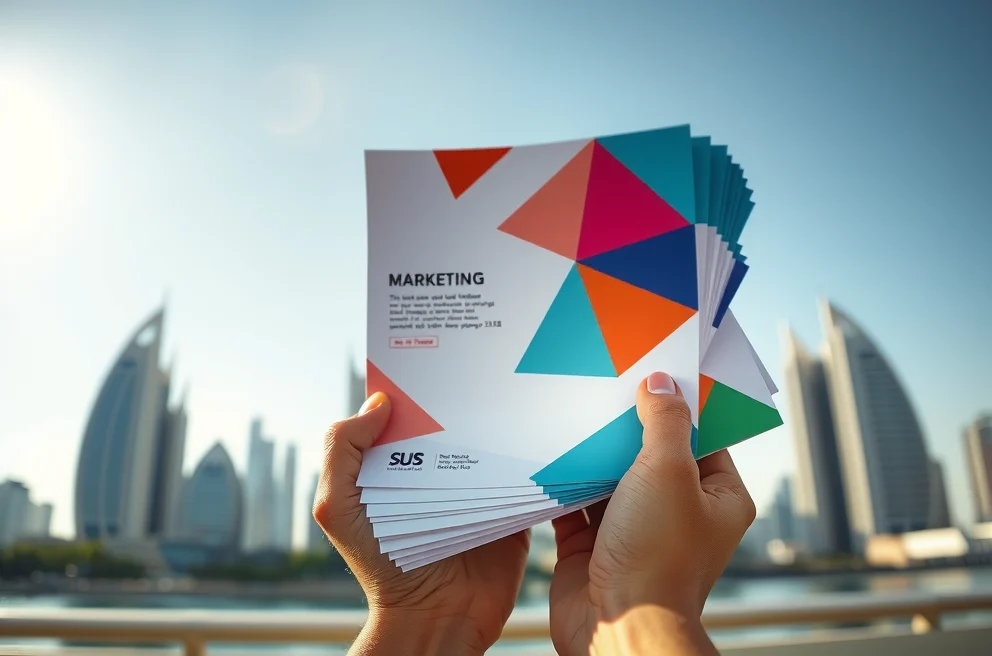
Exhibition catalogs connect to QR codes and personalized digital actions
Frequently Asked Questions
Do I need a permit for catalogs or other physical ads in Dubai?
Yes. Dubai Decree 6 of 2020 requires prior consent for physical advertisements such as promotions and leaflets. Permits come from competent authorities like RTA, DED, or relevant Free Zone authorities, and are issued in less than 10 days. Violations can trigger fines, removal of ads, or business closure for up to 6 months.
How fast can catalog printing be turned around for exhibitions?
Some trade show catalog printing services state a turnaround of 24–48 hours after order confirmation. This usually includes file review and approval steps. Actual timing can vary by run size, finishing options, and proofing cycles, so confirm the full schedule with your supplier before committing to a deadline.
What file formats and size limits are accepted for catalog printing?
One catalog printing service lists accepted file types as PDF, JPG, JPEG, PNG, AI, PSD, TIF, TIFF, and ZIP. The maximum file size is 1,000 MB. Always ask your vendor to confirm current file requirements and run a preflight check before printing.
What paper and finish choices make a catalog feel premium?
Premium catalogs often use heavier paper stocks and tactile finishes. Research highlights soft-touch coatings, foil stamping, and embossing as options that elevate the feel. Paper weights can range from lighter stocks for basic catalogs to heavier options for a luxury presence. Match the finish to your brand and how the catalog will be handled.
How do catalogs connect to digital marketing?
Catalogs can link to digital experiences using QR codes, personalized URLs, or augmented reality features. Variable data printing lets you personalize content for different audience segments. These features help track engagement and connect print with online actions, which is useful for campaigns that involve a print and digital marketing agency dubai.
What sustainable printing options should I ask for?
Ask for FSC or SFI certified paper and post-consumer recycled content at 30% or more when possible. Soy- or vegetable-based inks lower VOC emissions. Print-on-demand can reduce waste, and saddle-stitching is easier to recycle than perfect binding. These choices support eco goals without sacrificing quality.




One Comment
[…] stock paired with embossed finishes that can reflect that premium feel. Additionally, look into catalogue printing options for larger projects where consistent quality is […]