
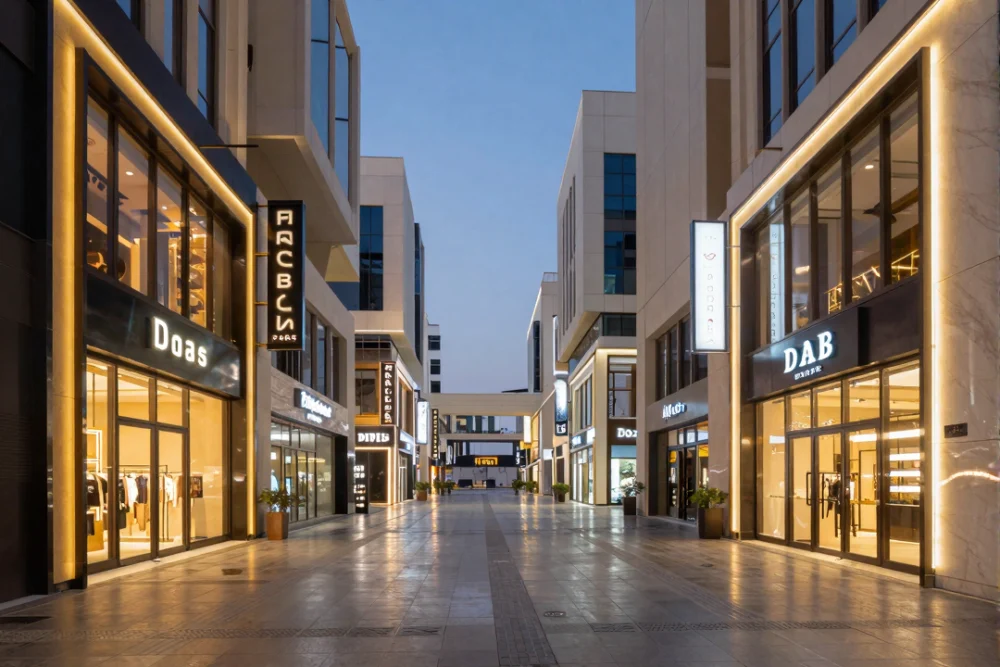

Close view of metal channel letters mounted off a wall with halo lighting, highlighting depth, standoffs, and clean installation details.
3d signage dubai solutions anchor brand credibility along Sheikh Zayed Road, across DIFC towers, and inside malls because dimensional faces offer depth, light, and durability that flat boards cannot match.
Architects, marketing leads, and facility managers rely on layered materials, tuned LEDs, and code-ready mounting methods to keep storefronts glowing when Dubai traffic peaks at night and to welcome clients into polished reception walls during the day.
Key Takeaways
- Respect Dubai heat: choose acrylic with UV-stable coatings or metal letters with sealed welds so rising temperatures and sand do not weaken joints.
- Match LED style to the goal: frontlit letters deliver bold retail pop, while halo-lit cans give hospitality walls a soft outline.
- Plan installs like a façade package: survey loads, confirm raceways or wireways, and schedule post-sandstorm cleaning.
- Verify municipal approvals early, especially for illuminated channel letter signage dubai projects that need structural sign-off and electrical inspections.
Why 3D Signage Matters in Dubai?s Skyline
Power Sign?s research shows that 79% of consumers read a business?s signage quality as a proxy for product quality, so Dubai storefronts leaning on shallow boards risk signaling that they are budget operations. When brands invest in dimensional letters, shadow lines and specular reflections make messages visible faster, which matters on Sheikh Zayed Road where vehicles pass in seconds and any hesitation means a missed prospect.
3D structures also perform better in Dubai?s climate. Raised letters produce natural shadow play in the intense sun, so logos stay legible even without continuous illumination. At dusk, integrated LEDs blast light forward or backward to keep visibility alive despite glare from towers or moving traffic. Because Dubai never stops, the signage has to remain legible through late dinners, early airport runs, and weekend mall surges.
These installations require more planning than simple vinyl prints. Designers specify aluminum backs, acrylic faces, or mixed systems depending on the wall finish. Fabricators then confirm weld quality, LED density, and power routing. The extra steps repay themselves through longer lifespan, stronger brand cues, and 24/7 visibility.
Why Premium Depth Converts Pedestrians
Dimensional letters create depth that stretches beyond mere decoration. A raised profile catches ambient light, casts crisp shadows, and guides eyes faster than flat graphics because our vision prioritizes contrast and depth cues. When walkers on Downtown Dubai promenades scan dozens of storefronts, the brands with layered letters and halos appear established while flat prints blend into the background.
This effect compounds after dark. iDesign Advertising notes that Dubai is a city that never sleeps, so illuminated façades are everywhere and competition for attention is fierce. Businesses that rely on simple vinyl lose visibility when nearby retailers run glowing, animated, or layered signage programs. In contrast, 3D letters with tuned LEDs keep their message intact even as drivers cruise by at high speed.
- 3D letters look substantial, signaling strong operations and premium service.
- They survive longer because materials are thicker than vinyl prints.
- Illumination options keep the sign working 24/7, crucial for hospitality and retail brands.
Premium depth does come with trade-offs. Material costs, fabrication labor, and professional installation fees exceed those of flat prints. Complex builds also need certified installers who understand electrical codes and façade loads; a DIY attempt can damage cladding or violate municipal rules. Treat the investment like a miniature construction project: budget for design, plan for LED maintenance, and expect to keep documentation for Dubai Municipality inspectors.
Material Showdown: Acrylic vs Metal for UAE Weather
Dubai?s sun, humidity, and airborne sand punish weak materials. Acrylic signage dubai projects deliver sleek surfaces, tight color matching, and a lightweight profile, but outdoor use demands UV-stable sheets plus polycarbonate or clear-coat protection. Metal signage dubai programs, especially aluminum builds, tolerate heat spikes and sandstorms better and integrate naturally with LED channel letter signage dubai systems.
Sabin Signs warns that low-quality substrates fail quickly under the UAE climate, leading to faded faces, warped frames, and extra maintenance visits. Spending more on properly coated aluminum or stainless returns, plus premium acrylic faces, extends service life and protects the marketing budget. When funds are limited, mixed builds—acrylic faces bonded to aluminum backs indoors, pure aluminum cans outdoors—balance appearance with durability.
| Material | Best Use | Durability | Maintenance | Notes |
|---|---|---|---|---|
| Acrylic Letters | Office reception signage, mall corridors, sheltered outdoor soffits | Strong indoors; needs UV-resistant coatings outside | Light cleaning with non-abrasive cloths | Lightweight, easier to mount on gypsum or glass partitions |
| Metal Channel Letters | Outdoor signage dubai facades, towers, exposed retail strips | Excellent against heat, UV, and sandstorms | Inspect wiring, repaint if salt air causes oxidation | Supports complex LED wiring; installation cost higher |
Materials should be matched to environment and structural backup. Acrylic letters attach easily to drywall or glass partitions because they weigh less and can use concealed studs or VHB tapes. Aluminum letters need through-bolts into structural members or raceways to bear the extra load, especially when wind loads rise along towers. Plan for thermal expansion so letters do not bow when afternoon temperatures spike.
Acrylic Letters for Indoor Elegance
Acrylic excels in corporate lobbies, coworking spaces, and mall interiors where brand teams want smooth gradients, translucent options, or metallic overlays. The material is light, so loads on gypsum, MDF, or glass partitions stay manageable, and installers can hide power supplies in compact wireways. Designers often pair acrylic letters with frontlit LEDs or edge lighting to generate a soft glow across the face without overwhelming reception desks.
Because acrylic absorbs UV, specify sheets with stabilizers for any location near sun-facing atriums. Clear coats or lamination protect colors from fading, while low-VOC adhesives keep letters bonded to glass without staining. Acrylic also supports add-ons such as embedded metallic films, vinyl overlays to match wayfinding colors, or laser-etched gradients for subtle depth. Always request full-size samples installed under real lighting, since daylight, cool-white downlights, and warm accent fixtures can all shift color perception.
Maintenance stays simple: dust with microfiber cloths, avoid harsh solvents, and inspect LED modules quarterly. If letters sit near HVAC vents, plan for periodic anti-static cleaning to prevent dust rings. Acrylic faces chip easily if mishandled, so keep a small stash of color-matched repair kits for quick fixes.
Metal Channel Letters Built for Streets
Metal channel letters dominate outdoor projects because they combine structural strength with precise fabrication. According to the channel letter fabrication process, installers CNC-cut the back plate from aluminum, then bend 3–6 inch returns to create a rigid ?can.? Welds, rivets, or flanges close the seams, creating a weather-resistant enclosure ready for LEDs.
Typical builds add a 3/16 inch acrylic or polycarbonate face locked in place with a trim cap so light passes forward. For halo applications, the face is aluminum, LEDs bounce light toward the wall, and letters mount roughly 1.5 inches off the surface to form a crisp outline. The inside of the can is usually painted white to maximize LED reflectance and keep hotspots minimal.
Expect higher costs due to welding, painting, electrical integration, and heavy-duty mounts. But the payoff is durability: aluminum dissipates heat, protects wiring, and resists corrosion when sealed properly. Use stainless anchors or raceways anchored into structural concrete, not cladding alone, so letters survive high wind loads. Schedule annual inspections to tighten hardware, reseal seams, and check LED modules for any failures.
Illumination Choices: Frontlit vs Backlit Channel Letters
LED technology now allows letter depths as slim as 2–3 inches, so both frontlit and halo-lit configurations can sit on narrow cladding bands or interior bulkheads. The right illumination plan depends on the business goal, target viewing distance, and wall finish. Think of illumination in three parts: direction of light, LED color temperature, and maintenance access. A balanced plan makes the sign legible from far away, on foot, and through window glass without blocking interior views.
LED layout should complement the face material. Warm white LEDs pair well with yellow or orange faces, while cool white makes blues and silvers pop. Perforated vinyl can help letters look dark by day and bright by night, an effect that keeps retail façades premium even in harsh sunlight. Always provide maintenance access: even though LEDs deliver long life, technicians still need safe ways to swap modules or drivers.
Frontlit Channel Letters for Bold Retail
Frontlit letters push light through acrylic faces for maximum contrast, making them ideal for malls, promenade storefronts, and street-level dining venues. When you walk through Dubai?s commercial hubs after dark, the signs that blaze forward tend to grab attention first, exactly as iDesign Advertising observed.
- Match LED color temperature to the face color (warm LEDs for yellow or orange faces).
- Use perforated vinyl if you want letters to appear dark by day and white by night.
- Plan for maintenance access; LEDs last long but still require inspection.
To execute well, start with a mood board that aligns the frontlit glow with the rest of the retail experience. Integrate guidance from Retail Signage Strategies for High Footfall so storefront visuals sync with window displays, point-of-sale stands, and wayfinding. Verify that the surrounding wall or canopy is not reflective enough to bounce glare back toward pedestrians; matte finishes keep light concentrated on the letters where it belongs.
Mounting strategy matters too. Flush-mounted letters look seamless but require precise drilling and waterproofing. Raceways conceal wiring and simplify service, although designers may paint them to match the wall. Always confirm that electrical circuits can handle the load, and provide a shutoff switch accessible from inside the shop for safe maintenance.
Halo-Lit Letters for Corporate Prestige
Backlit, or halo, channel letters cast light on the wall behind them, creating a soft outline that suits hotels, banks, and luxury residences. Installers mount each letter about 1.5 inches away from the wall using standoffs, paint the inside of the can white for even reflection, and ensure the wall surface is light-colored plus matte. Dark glossy panels kill the halo because they absorb or mirror light rather than diffusing it.
Halo builds often cost more due to precise standoff hardware, meticulous LED spacing, and the need to hide power cables inside a raceway or concealed wireway. But the look signals exclusivity. Use halo lighting when brand guidelines call for understated elegance or when the wall already features accent lighting that could overwhelm a frontlit sign. Coordinate halo brightness with ambient lighting to avoid overexposed halos in dark lobbies.
Because the light washes the wall, any surface imperfections become obvious. Plan for repainting or refinishing the mounting area before installation. If the façade material is too dark, consider adding a backer panel in a lighter tone to preserve the halo effect.
Installation Roadmap for Offices and Storefronts
Every 3D signage dubai project should follow a disciplined roadmap. Treat the job like building a mini façade: you need surveys, permits, structural checks, electrical routing, and post-install maintenance plans. Because installation requires specialized equipment, partner with vendors who document past work on towers, malls, and hospitality venues, and who can guide you through approvals. Facility managers searching for installers near me in Dubai must still verify portfolios, safety certifications, and municipal compliance knowledge.
- Site Survey: Measure wall load capacity, confirm attachment points, check available power, and photograph sun paths to understand how shadows will fall across the day.
- Design Validation: Review proofs at actual scale and simulate viewing distances; 3D mockups help confirm letter depth and LED intensity, especially when combining acrylic and aluminum.
- Fabrication: Confirm material specifications, LED type, and coatings. Request mock-ups if the project mixes acrylic faces and aluminum cans to ensure colors align between components.
- Installation: Use raceways for wiring on outdoor signage dubai facades and wireways for indoor runs. Ensure compliance with Dubai regulations, submit shop drawings when required, and plan safe access for high elevations.
- Maintenance Plan: Schedule cleaning, LED inspections, and seal checks, especially after sandstorms. Keep spare modules, transformers, or trim caps in storage to minimize downtime.
Document everything. Keep copies of structural reports, electrical diagrams, and municipal approvals, since property managers often request these before renewing signage permits. Sabin Signs flags red flags such as poor sample quality or vendors lacking outdoor warranties—if a supplier cannot show clean welds or prove experience in malls, exhibitions, or towers, keep looking.
Corporate Reception Walls
Indoor environments demand lighter loads, discrete cabling, and refined finishing. Acrylic letters with frontlit or edge-lit LEDs suit reception desks because they create even illumination and match modern interior palettes. Hidden wireways route power through stud cavities or behind wall panels, leaving only the glowing letters visible.
Because office lighting shifts between daylight, cool-white task lighting, and warm evening scenes, build mock-ups to confirm color accuracy at different times. Tie the wall palette back to broader brand collateral so visitors recognize the same colors across signage, stationery, and print pieces like those covered in Business Card Printing Hacks. If the reception wall features acoustic panels, coordinate with that vendor to ensure letter mounts do not compromise sound control.
Channel letter signage dubai solutions can route wiring through a hidden wireway, keeping the wall minimal. Use removable panels or access hatches for future maintenance so technicians do not have to cut drywall. Finally, align interior signage with brand messaging packages such as Business Branding Package Dubai to ensure the reception experience mirrors brochures, presentations, and digital campaigns.
Outdoor Storefronts and Sheikh Zayed Facades
Outdoor upgrades need fasteners rated for wind loads, sealed electrical components, and scheduled inspections. Metal channel letters excel here, especially when combined with weather-resistant substrates championed by Sabin Signs. Anchor raceways into concrete or structural steel, not cladding alone, and apply gaskets where letters penetrate the façade to stop water ingress.
Night visibility is crucial in entertainment districts, so coordinate signage brightness with surrounding campaigns like Billboard Advertising in Dubai. Align colors, slogans, and call-to-action statements so commuters see one cohesive story on street-level signs and roadside media. If the store participates in events or seasonal promotions, use guidelines from Event Branding Dubai: Essential Checklist for Success to sync permanent signage with pop-up booths, window graphics, or temporary banners.
For properties along beaches or highways, schedule rinses to remove salt spray and dust. LED modules sit inside sealed cans, but connectors and power supplies still need inspection. After any sandstorm, clean faces, check gaskets, and verify mounting bolts have not loosened. Document maintenance in a log so building management teams see that you are meeting contract obligations.
Plan the Next Steps
Create a research-backed matrix covering materials, LEDs, installation methods, and vendors. Shortlist providers with proven work in malls, outdoor plazas, and exhibitions, and request detailed scopes that list raceway size, power loads, and maintenance schedules. Tie the signage upgrade to marketing assets such as Sticker Printing Dubai kits for product launches or Car Branding Dubai wraps for event fleets so every touchpoint tells the same story.
Once fabrication starts, keep stakeholders aligned: marketing heads sign off on colors, facility teams coordinate power shutoffs, and safety officers confirm lift plans. Providers like Media Print UAE can coordinate surveys, fabrication, and municipal approvals inside one project plan, reducing coordination headaches. Finish by archiving drawings, maintenance logs, and spare components so your signage investment keeps drawing customers long after installation day.
References
- 2D v/s 3D Signs: Understanding the Basics ? Power Sign ? ? Power Sign | 2D v/s 3D Signs: Understanding the Basics
- Signboard Idea ? iDesign Advertising ? 2021-10-05 ? Signboard Idea | iDesign Advertising
- Why Large Format Printing Matters in UAE ? Sabin Signs ? 2025-09-01 ? Why Large Format Printing Matters in UAE
- Channel letter ? Wikipedia ? ? Channel letter

Modern office reception wall featuring acrylic three-dimensional letters with soft lighting, showing a refined indoor signage setup.
Frequently Asked Questions
What is the difference between 2D and 3D signs?
2D signs are flat, printed on surfaces like metal, vinyl, or plastic. They cost less, are lightweight, and work well for temporary or information-heavy displays. 3D signs have raised letters, look more premium, and last longer, but cost more and are harder to install. In 3d signage dubai, research notes 79% of consumers link signage quality to product quality.
Can 3D signs handle Dubai outdoor weather?
Yes, but material choice matters. Research says 3D signs can be used outdoors when the materials are selected for weather exposure. Heat, UV, and sand require durable builds like aluminum letters and UV-stable acrylic faces. Plan for inspections and cleaning after sandstorms. This is especially important for outdoor signage dubai projects with long-term visibility goals.
What are channel letters in signage?
Channel letters are custom-made, three-dimensional letters used on building exteriors and interiors. They are usually made from aluminum backs with bent side returns, then fitted with LED or neon lighting. A translucent acrylic or polycarbonate face (often about 3/16 inch thick) is added with a trim cap. This structure supports illuminated signage dubai that stays visible at night.
Frontlit vs backlit channel letters: what is the difference?
Frontlit letters push light through the face for maximum visibility. Backlit (halo) letters direct light onto the wall behind the letter for a softer outline. Research notes that backlit letters are often mounted about 1.5 inches off the wall and work best on light, matte surfaces. Backlit builds can cost more due to precision spacing and mounting needs.
Acrylic vs metal letters: which lasts longer?
Metal letters, especially aluminum, tend to last longer outdoors because they handle heat, UV, and sand better. Acrylic letters are lighter and suit indoor applications like office reception signage, but outdoor use needs UV-stable sheets and protective coatings. For many projects, a mix works well: acrylic faces on aluminum backs to balance appearance and durability.

There are 2 comments
[…] 3D signage Dubai buyers guide for dimensional signage […]
[…] benefit more from the elegant glow of back-lit options at night. By leveraging the strengths of 3D signage Dubai, businesses can enhance their aesthetic appeal, further boosting brand […]